Small business websites are no longer judged only by how they look. Clean design, fast loading and clear calls to action still matter. But they are table stakes now.

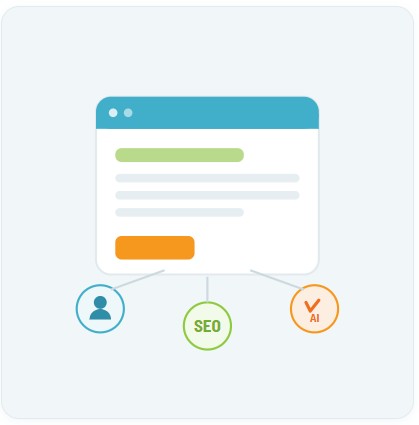
The websites that actually generate enquiries are the ones that explain a business clearly enough for customers, Google and AI-powered search tools to understand what that business does, who it helps and why it can be trusted.

At Quikclicks, we have built our AI-Ready Website Framework around that idea — not to help businesses chase trends or optimise for machines, but to help them build websites that do what websites are supposed to do: bring in the right customers.
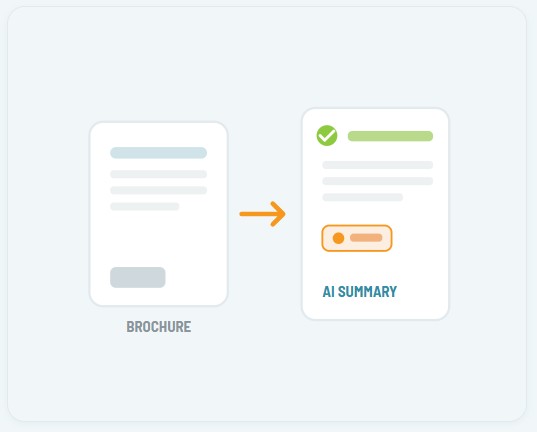
The online brochure era is over.

Why small business websites need to evolve

For years, a business could get away with a website that introduced the company, listed a few services and provided a contact form. That was enough when customers used Google to find a phone number and then called to learn more.

That is not how most customers behave now. They research before they call. They compare providers across Google, maps, review platforms, social media and, increasingly, AI tools. A customer searching for a Sydney electrician or a Melbourne accountant might not get a list of ten links anymore — they might get an AI-generated summary that answers their question directly, drawn from the websites that explained themselves most clearly.

A website that has not evolved to meet that expectation is not working as hard as it could be.

Why small business websites need to evolve

It does not mean the content was written by AI.

An AI-ready website is one that is structured clearly enough for AI-powered platforms — Google AI Overviews, ChatGPT Search, Perplexity, Microsoft Copilot — to understand the business accurately and present it as a relevant result.

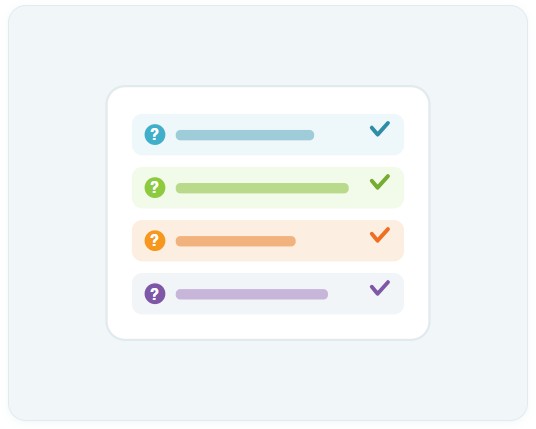
In practice, that means a website needs to clearly explain what the business does, who it serves, where it operates, what the process looks like, why it can be trusted and what someone should do next. These are the questions a customer would ask before picking up the phone. A website that answers them well is useful for customers first — and that usefulness is exactly what search engines and AI tools are trying to surface.

When a website is vague or thin, everyone loses. Customers cannot make a confident decision. Search engines have less to work with. AI tools may cite a competitor who was simply clearer.
Not a checklist — a way of thinking

The Quikclicks AI-Ready Website Framework

It covers website strategy, content structure, local SEO, technical foundations and the signals that help a website perform across both traditional and AI-powered search. Here’s what it makes sure your website actually does.

Clear business positioning

Generic phrases like “quality service” and “trusted professionals” differentiate no one. A homepage and key service pages should make the offer obvious within seconds — what you do, who you help, where you operate and why someone should choose you.

Clarity questions, not marketing questions — the foundation of everything else.

Useful service pages

A single generic Services page is almost never enough. Each major service deserves its own page explaining who it suits, why customers need it, what the process looks like and what to do next — answering the questions a customer would ask on a phone call.

Thin pages don’t convert — and don’t give AI tools enough to work with.

Local relevance

Customers need to know whether you operate in their area; Google and AI tools need to understand your service area. Not dozens of suburb-swapped pages — location appearing naturally in service pages, contact details and real local case studies.

Sydney businesses: keep name, address, phone and URL identical across your site, Google Business Profile and directories.

Trust & credibility signals

People don’t enquire unless they feel confident. How long have you operated? What does the work look like? What do customers say? Are there qualifications or licences? Genuine testimonials and real case studies reduce doubt and convert browsers.

AI tools prioritise genuine experience — real proof is more likely to be cited as trustworthy.

Answer-first content structure

One of the most effective improvements costs nothing — it’s about the order information appears. Lead with the answer, then provide context. Use headings that reflect real questions, and FAQs that address what customers actually ask.

Also called AEO — Answer Engine Optimisation. Bury the answer and AI cites a competitor who got to the point faster.

Conversion-focused structure

A website can be well-written and technically sound and still fail if the next step isn’t obvious. Good conversion design isn’t aggressive language or popups — it’s removing friction with clear navigation, visible contact details and straightforward enquiry forms.

The goal: a website that guides people naturally toward the next step.

Technical and mobile performance

Pages that load slowly lose visitors before content appears — especially on mobile, where most small business searches now happen. Fast pages, mobile-friendly design, SSL security, working forms and accurate analytics are the baseline.

Not the finish line — the floor. Broken forms and crawlability issues create barriers for customers and AI alike.

Structured content & schema markup

Schema markup in JSON-LD tells Google, Bing, ChatGPT and Perplexity exactly who you are, what you do, where you operate and what customers say. Local business, service and review schema are the most relevant for small businesses.

No longer optional in 2025–2026 — AI platforms use structured data to verify business entities before citing them.

Content freshness & ongoing improvement

A website is not a finished project. A site unchanged in two years looks, to an automated system, like a business that may no longer be active. Adding a case study, improving a thin page or publishing a useful FAQ sends the opposite signal.

Not publishing for its own sake — keeping the site accurate, current and genuinely useful as the business grows.

Who is this framework suitable for?

The framework is well suited to local service businesses, trades, professional firms, healthcare and allied health providers, consultants, ecommerce businesses and growing small to medium businesses — particularly those planning a website redesign, or those that feel their current site looks acceptable but is not generating the enquiries or enquiry quality it should.