
At Quikclicks, we make it our business to stay on top of every shift in the digital landscape that could affect how your brand performs online. The latest change from Google may sound technical, but it has wide-reaching implications for anyone tracking their rankings in search.
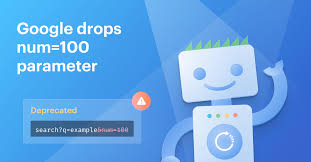
Google Removes “&num=100” Parameter: What It Means for SEO and Rank Tracking
What Changed
For years, SEOs relied on a simple URL parameter—“&num=100”—to quickly display the top 100 organic results for any Google search. This made rank tracking far more efficient, especially for tools and platforms that analyse performance across multiple positions.
That parameter has now been retired. As of September 2025, search results can no longer be expanded to show the first 100 results in one view. This means both agencies and software providers have less direct visibility into rankings beyond page one.
Why It Matters
It’s no secret that page one is where the clicks happen. But positions beyond that aren’t irrelevant:
- They help spot content that’s close to breaking into the first page.
- They show where competitors are starting to gain traction.
- They provide insight into content refresh opportunities and trends.
Without easy access to those extended rankings, SEO professionals need to lean more heavily on other signals—such as traffic patterns, backlink growth, and engagement metrics—to identify opportunities.
How Tools Are Responding
Ahrefs, one of the most widely used SEO platforms, has confirmed the update has limited their ability to pull ranking data beyond page one. While this affects depth of reporting, the frequency of updates remains unchanged, and they are already exploring workarounds to minimise disruption.
Other major platforms, including Semrush and Accuranker, have reported similar impacts.
Industry-Wide Effects
The knock-on effect has been significant. According to Search Engine Land:
“The removal of the num=100 parameter triggered sharp drops in Google Search Console impressions, rankings, and keyword visibility. 87.7% of sites lost impressions, 77.6% lost unique ranking terms, and short-tail and mid-tail keywords took the biggest hit. Platforms including Semrush and Accuranker have acknowledged disruptions, while SEOs like Brodie Clark noted that scrapers tied to num=100 may have distorted metrics for years.”
— Search Engine Land
This illustrates that the issue isn’t just about tool functionality—it’s fundamentally altering the way we measure and interpret ranking data.
What This Means for Businesses
For businesses relying on organic search as a key channel, the change underlines a few important truths:
- First-page visibility is more important than ever. With fewer reliable signals beyond page one, competition for top spots intensifies.
- Data strategies must adapt. Metrics like backlinks, engagement, and traffic estimates are now even more valuable for spotting trends.
- SEO remains an evolving game. Parameters, tools, and methods will continue to change—but the fundamentals of relevance, authority, and user experience stay the same.
Quikclicks’ Perspective
At Quikclicks, our role is to filter through these changes and adjust strategies so your digital presence isn’t disrupted. While the &num=100 update reduces the depth of rank tracking data available, it doesn’t change how we approach SEO at its core.
We’ll continue to:
- Monitor industry updates from Google and leading SEO platforms.
- Focus strategies around page one results, where conversions actually happen.
- Provide reporting and insights that highlight real business outcomes, not just positions in search.
Final Word
Search will always evolve. AI-driven experiences, parameter changes, and shifting user behaviours all shape how visibility works. The retirement of the &num=100 parameter is just one example—but it reinforces a key point: SEO is about agility, consistency, and long-term strategy.
Quikclicks clients can rest assured we’re already adapting, keeping campaigns aligned with what matters most—more visibility, more traffic, and more customers.