
AI-Ready Website Framework for Small Businesses
What our customers say

The Quikclicks AI-Ready Website Framework helps small businesses build websites that customers, Google and AI search tools such as ChatGPT can clearly understand. It covers clear positioning, useful service pages, local relevance, trust signals, answer-first content, conversion, technical performance, schema markup and keeping your site up to date.
Small business websites are no longer judged only by how they look. Clean design, fast loading and clear calls to action still matter. But they are table stakes now.
The websites that actually generate enquiries are the ones that explain a business clearly enough for customers, Google and AI-powered search tools to understand what that business does, who it helps and why it can be trusted.
At Quikclicks, we have built our AI-Ready Website Framework around that idea — not to help businesses chase trends or optimise for machines, but to help them build websites that do what websites are supposed to do: bring in the right customers.
Why small business websites need to evolve
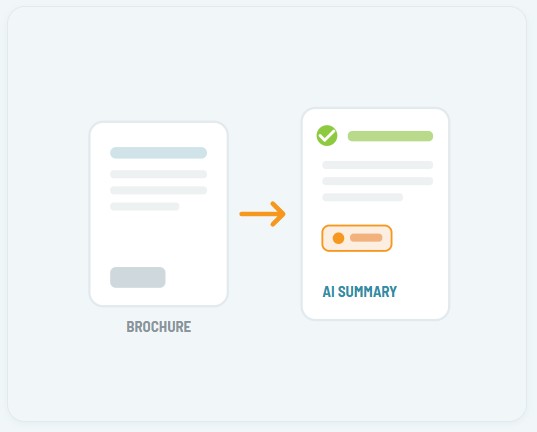
The online brochure era is over.
For years, a business could get away with a website that introduced the company, listed a few services and provided a contact form. That was enough when customers used Google to find a phone number and then called to learn more.
That is not how most customers behave now. They research before they call. They compare providers across Google, maps, review platforms, social media and, increasingly, AI tools. A customer searching for a Sydney electrician or a Melbourne accountant might not get a list of ten links anymore — they might get an AI-generated summary that answers their question directly, drawn from the websites that explained themselves most clearly.
A website that has not evolved to meet that expectation is not working as hard as it could be.
What does “AI-ready” actually mean?
It does not mean the content was written by AI.
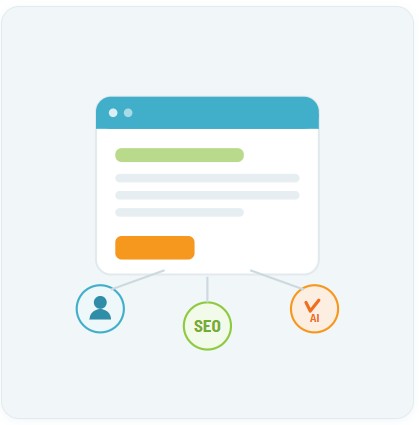
An AI-ready website is one that is structured clearly enough for AI-powered platforms — Google AI Overviews, ChatGPT Search, Perplexity, Microsoft Copilot — to understand the business accurately and present it as a relevant result.
In practice, that means a website needs to clearly explain what the business does, who it serves, where it operates, what the process looks like, why it can be trusted and what someone should do next. These are the questions a customer would ask before picking up the phone. A website that answers them well is useful for customers first — and that usefulness is exactly what search engines and AI tools are trying to surface.
When a website is vague or thin, everyone loses. Customers cannot make a confident decision. Search engines have less to work with. AI tools may cite a competitor who was simply clearer.
The Quikclicks AI-Ready Website Framework
Our framework is not a checklist. It is a way of thinking about what a small business website needs to do — and then making sure it actually does those things.
It covers website strategy, content structure, local SEO, technical foundations and the signals that help a website perform across both traditional and AI-powered search.
Clear business positioning
Most small business websites say too little about what they actually do.
Generic phrases like “quality service”, “trusted professionals” and “experienced team” appear on thousands of websites and differentiate no one. They are fine as supporting statements, but they cannot carry the weight of explaining a business on their own.
A homepage and key service pages should make the business offer obvious within seconds. What does the business do? Who does it help? Where does it operate? What problem does it solve and why should someone choose it over the other results on the page? These are not marketing questions — they are clarity questions, and getting them right is the foundation of everything else.
Useful service pages
Service pages are where most small business websites fall short.
A single, generic Services page is almost never enough. Each major service a business offers should have its own dedicated page — one that gives customers the information they need to feel confident, and gives search engines and AI tools a clear signal about what the business provides.
A strong service page does not just name the service. It explains who the service suits, why customers typically need it, what the process looks like, what to consider before getting started and what to do next. It answers the questions a customer would ask on a phone call — before they have had to make that call.
Thin pages with two or three generic paragraphs rarely perform well. They do not convert customers and they do not give AI tools enough to work with.
Local relevance
For local businesses, the website needs to make geography clear.
Customers need to know whether the business operates in their area. Google and AI tools need to understand the service area to surface the business in relevant local searches. A website that is vague about location — especially for a trade, healthcare provider or professional service firm — is leaving enquiries on the table.
This does not mean building dozens of suburb-swapped pages with nearly identical content. That approach produces a poor user experience and is easily recognised by search engines. It means location information appearing naturally and consistently — in service pages, contact details and case studies that reflect real local work.
For Sydney businesses in particular, Google Business Profile consistency matters. The business name, address, phone number and website URL need to match exactly across the website, Google Business Profile and any directories. Regular activity on Google Business Profile — photos, posts, updated information — also supports visibility in map results and AI-generated local responses.
Trust and credibility signals
People do not enquire unless they feel confident.
The job of a small business website is not just to describe services — it is to reduce doubt. How long has the business been operating? What does the work look like? What do previous customers say? Are there qualifications, licences or industry memberships that are relevant? Is there a real team behind the business?
These are the signals that convert a browsing visitor into an enquiry. They also matter for AI visibility. AI tools — including Google AI Overviews — prioritise content that demonstrates genuine experience and expertise. A page that shows real proof of a business’s work is not just more persuasive to customers; it is more likely to be cited as a trustworthy source.
Trust signals should feel honest, not polished to the point of feeling manufactured. Genuine testimonials, real case studies and straightforward service explanations will outperform inflated claims every time.
Answer-first content structure
One of the most effective improvements a small business website can make costs nothing. It is simply about the order information appears on the page.
AI tools are designed to find the most direct, useful answer to a question. When a page buries its answer in background context, they may skip it and cite a competitor who got to the point faster. This is sometimes called Answer Engine Optimisation, or AEO, and it is increasingly relevant as more customers begin their research through AI tools rather than traditional search.
The principle is simple: lead with the answer, then provide context for those who want it. Put key information near the top of the page. Use headings that reflect real questions, not just topic labels. Write FAQ sections that address what customers actually ask, not the questions that feel easiest to answer. A website that communicates clearly is a website that gets found.
Conversion-focused website structure
A website can be well-written, well-structured and technically sound — and still fail to generate enquiries if the next step is not obvious.
Good conversion design is not about aggressive language or persistent popups. It is about removing friction. Clear navigation, visible contact details, straightforward enquiry forms and relevant calls to action at the right moments all make it easier for a visitor to decide to get in touch. If someone has to search for a phone number or wonder which form to fill in, the website is working against itself.
The goal is a website that guides people naturally toward the next step.
Technical and mobile performance
A website’s technical foundations have a quiet but significant effect on its performance.
Pages that load slowly lose visitors before the content even appears — particularly on mobile, where most small business searches now happen. Poor mobile design, broken forms, expired SSL certificates or crawlability issues all create barriers, both for customers and for the search and AI systems that index the site.
Technical performance is not about complexity. It is about a stable, secure, well-maintained website that works properly for everyone who visits it. Fast-loading pages, mobile-friendly design, SSL security, functioning forms and accurate analytics are the baseline — not the finish line, but the floor.
Structured content and schema markup
Behind the visible content, there are technical signals that help search engines and AI tools understand a website accurately.
Schema markup — implemented in JSON-LD format — is the clearest of these signals. It tells Google, Bing, ChatGPT and Perplexity exactly who the business is, what it does, where it operates and what customers say about it. In 2025 and 2026, this is no longer an optional enhancement. AI platforms use structured data to verify business entities before citing them, and sites without it are at a disadvantage.
Local business schema, service schema and review schema are the most relevant for small businesses. Beyond schema, clear heading structure, internal links between related pages and consistent business information across every page and platform all reinforce the same message: this is a real, specific business with a clear offer.
Content freshness and ongoing improvement
A website is not a finished project.
Search engines and AI tools treat content freshness as a signal of credibility. A business whose website has not changed in two years looks, to an automated system, like a business that may no longer be active. Regular, purposeful updates — adding a case study, improving a thin service page, publishing a useful FAQ, refreshing outdated information — send the opposite signal.
The goal is not constant publishing for its own sake. It is keeping the website accurate, current and genuinely useful as the business grows and customer questions evolve.
Who is this framework suitable for?
The framework is well suited to local service businesses, trades, professional firms, healthcare and allied health providers, consultants, ecommerce businesses and growing small to medium businesses — particularly those planning a website redesign, or those that feel their current site looks acceptable but is not generating the enquiries or enquiry quality it should.
How Quikclicks applies the framework
We use the framework to plan, structure and improve small business websites — whether that is a new build, a redesign or a staged improvement to an existing site.
In practice, that might mean reviewing an existing website to identify content gaps, rewriting weak or thin service pages, improving site structure and navigation, implementing schema markup, designing clearer enquiry pathways or improving local SEO signals. The work depends on what the website currently does and what it needs to do better.
A better website for people first
AI visibility, search rankings and technical foundations matter. But they are in service of something simpler: helping a real person understand a business, feel confident in the provider and take the next step.
That is still what a good small business website is for. The Quikclicks AI-Ready Website Framework is built around that idea — making websites that work for the people who visit them, and making sure those websites are structured clearly enough for the systems that help people find them.
Frequently Asked Questions
What is an AI-ready website?
An AI-ready website is one that is clearly structured, useful and easy for search engines, AI tools and customers to understand. It explains the business clearly, answers common customer questions and uses technical signals — like schema markup and consistent business information — that help AI-powered platforms verify and present the business accurately.
Does AI-ready mean the content is written by AI?
No. AI-ready refers to how the website is structured, not how the content was produced. The goal is clear, accurate and useful content for real customers, presented in a way that search engines and AI tools can also interpret effectively.
Which AI tools does this apply to?
The framework is designed to support visibility across Google AI Overviews, Google AI Mode, ChatGPT Search, Perplexity, Microsoft Copilot and similar AI-powered platforms — as well as traditional Google search results.
Is this different from SEO?
It overlaps with SEO but goes further. Traditional SEO focuses primarily on search ranking. An AI-ready approach also considers how clearly the business is explained, how content is structured to answer specific questions, whether trust signals are clearly communicated and whether the technical foundations allow AI tools to accurately understand and cite the website.
Can an existing website be made AI-ready?
Yes. Many websites can be significantly improved without a full rebuild. Strengthening service pages, adding useful FAQs, improving internal links, implementing schema markup and addressing technical issues are all things that can be done on an existing site.
Is this only for Sydney businesses?
No. The framework applies to small businesses across Australia. Quikclicks is a Sydney-based agency, but the principles are the same wherever the business operates.
Will this guarantee that my business appears in AI search results?
No. There are no guarantees with AI search results, and any agency that claims otherwise should be approached carefully. What a clearer, better-structured website does is give search engines and AI tools much stronger information to work with — which improves the likelihood of being cited accurately.
What types of businesses benefit most?
Any small business that relies on its website for enquiries, trust or sales — particularly those competing locally. Service businesses, trades, professional firms, healthcare providers, consultants and ecommerce businesses all benefit from clearer website structure and stronger content.

Speak to Quikclicks
If your website is unclear, outdated or not generating the enquiries your business needs, Quikclicks can help you review the opportunity and plan a practical way forward.
Contact Quikclicks to discuss small business website design, website redesigns, WordPress development, ecommerce websites, SEO and ongoing digital marketing support.